Minnie Kate (Mays) Massie. If Minnie Kate's name is found nowhere else on the World Wide Web, then at least her name may be found in an Internet search as long as this essay about a hot day in July remains online.
I'd known Minnie Kate many years before I found out that she carried a once very popular southern name of Minnie. What I knew her by was Grandma, Mom, and Miss Kate. Grandma was my ex-Y's grandmother. And mine too.
Proof I CAN be BRIEF
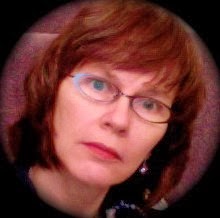
- Claire L. Prideaux
- What to say? I could list the very nice things people have said about me or the worst things people have said about me. What I'd prefer is for my essays to speak for themselves. I'm human, I have human frailties. Let's let it go at that, eh? (Goal beginning 9/2011: when able, publish one essay a week. Both light-hearted and serious fare. Join in the conversation!) Blog Archive on right.
Thursday, July 28, 2011

Monday, July 25, 2011
The Queen of Sheba
It's dog days of summer so I thought that perhaps I ought to focus on writing about summer topics. Forget stories about adventures in skiing and ice skating. (Wrote that just to cool you off.)
Worms. There's a summer topic for you. Though hardly the point of today's essay.
I spent the first 11 years of my life first in Naval housing and then in project-like apartment complexes. And what most of those places had in common in the 50's and 60's were kids. Lots of them.
While I cannot pin point when I realized I was an odd child out (okay, I can but that's a story for another time), it became super clear sometime after I moved into Parkway Terrace at age five, a brick-faced set of apartments that were probably 1940s era. One of the things I discovered after a while (attending school also helped in this discovery) is that children can be mean, particularly in a group. And though they can definitely be mean to each other, they seem to take extra delight in hurting things that are new to or different from them. And in their hive mind mentality they can be fascinated by difference and open to the suggestion to squash it. (Yes, indeed, The Lord of the Flies reflected my internal experience of children in groups.)
Worms. There's a summer topic for you. Though hardly the point of today's essay.
I spent the first 11 years of my life first in Naval housing and then in project-like apartment complexes. And what most of those places had in common in the 50's and 60's were kids. Lots of them.
While I cannot pin point when I realized I was an odd child out (okay, I can but that's a story for another time), it became super clear sometime after I moved into Parkway Terrace at age five, a brick-faced set of apartments that were probably 1940s era. One of the things I discovered after a while (attending school also helped in this discovery) is that children can be mean, particularly in a group. And though they can definitely be mean to each other, they seem to take extra delight in hurting things that are new to or different from them. And in their hive mind mentality they can be fascinated by difference and open to the suggestion to squash it. (Yes, indeed, The Lord of the Flies reflected my internal experience of children in groups.)
Thursday, July 21, 2011
The Dozen Drama Rules (or How to be a Drama Queen)
Watching the Australian drama series "McLeod's Daughters," I have come to better understand the rules of drama. Little did I know, until I starting watching this series, that dramas hold valuable lessons about life... my life.
When I was a kid, I'd watch dramas, though I admit that I found them annoyingly frustrating and didn't quite understand their appeal. Unless, of course, the viewer actually enjoyed feeling as wretched as the characters. After becoming a certifiable Pollyanna in my early twenties, dramas lost their appeal altogether, and I only had time for feel-good movies and comedies. And true to the maxim of life imitating art, I kept trying to cast myself into a feel-good life, or at least a comedy (which I may have very well succeeded).
Monday, July 18, 2011
Asperger's Face
"If you’ve met one person with autism,
you’ve met one person with autism." - Stephen Shore
Asperger's is on the autism spectrum*, and so if you've met one person with Asperger's you've met one person with Asperger's. Meaning, that people on just about any spectrum that defines any difference from the norm are as mixed a group as people in general. As a result, over generalizing and thinking you know what to expect when interacting with a person with Asperger's (AS) would be a prescription for misunderstanding. Perhaps much more so than over generalizing and expecting that you know what to expect from most people in general. Though becoming educated about Asperger's, might make our worlds a little nicer and our ability to communicate with you a little better. That is, if you can keep yourself from believing that all Asperger's generalizations apply to all individuals with Asperger's, leaping to conclusions about our behavior, and turning your assumptions about us into facts when you are interacting with us.
As I may have mentioned previously (and may mention again), I received the Asperger's diagnosis later in life, which is typical of women (for possibly a variety of reasons that I won't go into here). It's been strangely empowering to finally be making sense of so much of my history, and oddly frightening now that I have some vague idea of how people may experience me beyond what's been obvious to me. Not to mention aspects about myself that I thought had to do with personality when they have more to do with my brain's wiring. (I had a similar experience when I received an ADD diagnosis and learned the ins and outs of how ADD can affect behavior, but not quite so profound.)
Today's blog is about Asperger's Face in particular. Something that many of us with AS may contend with to varying degrees. Search for that phrase and you probably will not find it, though it is acceptably descriptive for this essay. About as easy to wrap up a concept as, say, the word neurotypical. (Neurotypical or NT is the term used to describe people who are not on the autism spectrum.)
Subscribe to:
Posts (Atom)